Future directions in software development which can be traced in 2026
Future of Software Development: Top Trends to Watch in 2026
Software development is changing rapidly as businesses adopt modern technologies to improve efficiency, security, scalability, and customer experiences.
As we move through 2026, emerging technologies and development practices are changing how software is designed, built, deployed, secured, and maintained.
Understanding the latest software development trends can help businesses make better technology decisions and prepare their digital products for changing customer and market requirements.
This article explores some of the most important software development trends in 2026, including artificial intelligence, cloud-native development, cybersecurity, low-code platforms, API-first architecture, progressive web applications, and sustainable software development.
Adoption of Artificial Intelligence and Machine Learning
Artificial Intelligence and Machine Learning are becoming increasingly integrated into modern software development.
AI-powered applications can analyze data, automate repetitive tasks, personalize user experiences, and support business decision-making.
How AI Is Reshaping Software Development
AI can support software and business processes through:
- Intelligent workflow automation
- Data analysis and predictive insights
- Personalized user experiences
- AI-powered customer support
- Automated content and code assistance
- Intelligent search and recommendation systems
Areas of Application
AI is being integrated into systems such as Customer Relationship Management (CRM) platforms to support customer analysis, lead scoring, recommendations, and sales workflows.
Businesses can also integrate AI into custom applications to automate repetitive processes and provide data-driven insights.
Companies interested in building AI-powered solutions can explore AI/ML Development Services.
Low-Code and No-Code Development
Low-code and no-code platforms allow businesses to create applications with significantly less traditional programming.
These platforms can be useful for organizations that need to build simple internal tools, workflows, prototypes, or business applications quickly.
Major Advantages
- Faster application development
- Reduced development effort for suitable projects
- Easier workflow automation
- Greater accessibility for non-developers
- Faster prototyping
However, low-code and no-code platforms are not suitable for every project.
Complex applications with specific performance, security, integration, or scalability requirements may benefit from Custom Software Development.
Cloud-Native Software Development
Cloud-native development focuses on building applications that are designed to take advantage of modern cloud infrastructure.
Cloud-native architectures can improve scalability, flexibility, deployment automation, and application availability when implemented appropriately.
Advantages of Cloud-Native Development
- Flexible scalability
- High availability
- Automated deployment
- Efficient infrastructure management
- Improved application resilience
- Integration with modern cloud services
Technologies such as Docker, Kubernetes, containers, and serverless computing are commonly associated with cloud-native development.
For businesses moving applications to modern infrastructure, cloud-native architecture can provide greater flexibility as application requirements change.
Cybersecurity-First Software Development
Cybersecurity is becoming an increasingly important part of software development.
Organizations need to consider security throughout the software development lifecycle rather than treating it as a final-stage activity.
Key Security Trends
- Secure software architecture
- Zero-trust security approaches
- Strong authentication and authorization
- Data encryption
- Dependency and vulnerability scanning
- Security testing
- Regular compliance assessments
Businesses handling financial, customer, healthcare, or other sensitive information need appropriate security controls based on their specific requirements.
A security-by-design approach can help identify and address potential vulnerabilities earlier in the development process.
Progressive Web Applications (PWAs)
Progressive Web Applications combine capabilities of modern websites with features commonly associated with mobile applications.
PWAs can provide fast and responsive experiences across supported devices without requiring users to install a traditional application from an app store.
Why Businesses Use PWAs
- Fast loading experiences
- Responsive design
- Offline capabilities in supported scenarios
- Cross-device accessibility
- Web-based distribution
- Potentially lower maintenance requirements than separate applications
PWAs can be useful for businesses that want to provide app-like web experiences while maintaining a web-based delivery model.
However, whether a PWA or native mobile application is more appropriate depends on the project's functionality and requirements.
For businesses requiring dedicated mobile applications, App Development Services can support custom mobile solutions.
API-First Development
Modern software applications frequently depend on APIs to communicate with other applications, services, databases, and platforms.
An API-first development approach treats APIs as an important part of the architecture from the beginning of the development process.
Benefits of API-First Development
- Easier third-party integrations
- Better system interoperability
- Reusable services
- Faster development workflows
- Greater scalability
- Easier integration between web and mobile applications
API-first architecture can be particularly useful for SaaS platforms, mobile applications, enterprise systems, and applications that depend on multiple external services.
Green and Sustainable Software Development
Sustainability is becoming an increasingly discussed topic within the software industry.
Green software development focuses on reducing the energy and computing resources required to operate software.
Key Areas of Focus
- Optimizing application performance
- Reducing unnecessary server processing
- Efficient database queries
- Optimizing cloud resource usage
- Reducing unnecessary data transfer
- Improving infrastructure efficiency
Efficient software can potentially reduce infrastructure consumption while also improving application performance.
Sustainable development therefore has both environmental and operational considerations.
Why Businesses Need to Follow Software Development Trends
Keeping up with relevant technology trends can help businesses make better long-term technology decisions.
Modern development practices can support:
- Improved productivity
- Better customer experiences
- Greater scalability
- Improved security
- Faster development cycles
- Reduced maintenance effort
- More flexible digital products
However, businesses do not need to adopt every new technology.
The right approach is to evaluate each technology based on business objectives, users, budget, security requirements, technical complexity, and expected return on investment.
Why Choose CohostWeb for Software Development?
At CohostWeb, we focus on building software solutions around specific business requirements rather than using technology simply because it is new.
Our software development capabilities include:
- Custom software development
- Web application development
- Cloud-based solutions
- API development and integration
- Scalable application architecture
- AI and ML integration
- Modern software technologies
Businesses can explore our Software Development Services to learn more about our development approach.
For web-based projects, you can also explore our Web Development Services.
Conclusion
Software development in 2026 is being shaped by AI, cloud-native architectures, cybersecurity, API-first development, low-code platforms, PWAs, and sustainable software practices.
These technologies can provide new opportunities for businesses, but adopting a technology should always be based on actual business and technical requirements.
Companies planning to develop or upgrade their software should focus on building solutions that are secure, scalable, maintainable, user-focused, and adaptable to future requirements.
The future of software development is not simply about using the newest technology. It is about choosing the right technology to solve the right business problem.


Related Post
 February 02, 2026
Artificial Intelligence & Machine Learning for Business Growth
Artificial Intelligence, Machine Learning, AI and ML, AI in business, Machine learning in business, AI driven solutions, AI powered websites, AI website development, AI for business growth, AI automat...
Keep Reading January 17, 2026
GitHub and GitHub Co-pilot: A Comprehensive Guide, Analysis, and Future Outlook
GitHub and GitHub Copilot are transforming modern software development. Learn how AI-assisted coding improves productivity, collaboration, security, and future-ready development practices.
Keep Reading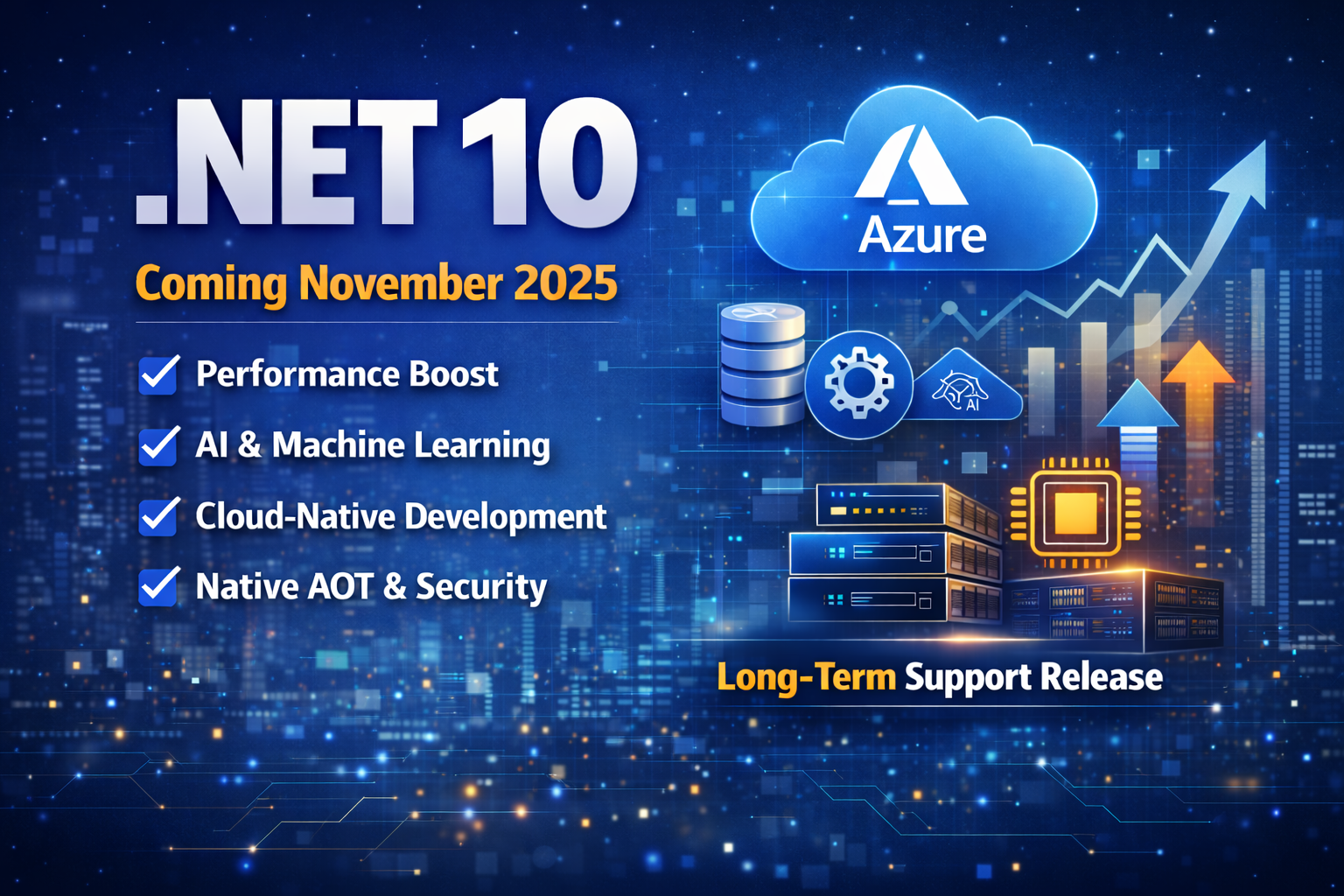 January 17, 2026
What is New about .NET 10: What is New, Which is Better and What is the Future Vision of Microsoft
.NET 10 is the next long-term support release planned for November 2025. It focuses on performance improvements, cloud-native development, Native AOT, AI integration, and enterprise-ready security enh...
Keep Reading